
Yoga wear supply & private label
Yoga wear supply & private label
Everyone quotes “MOQ 100 pieces”. What that actually costs you — and what it does not include — is where most first collections go wrong.
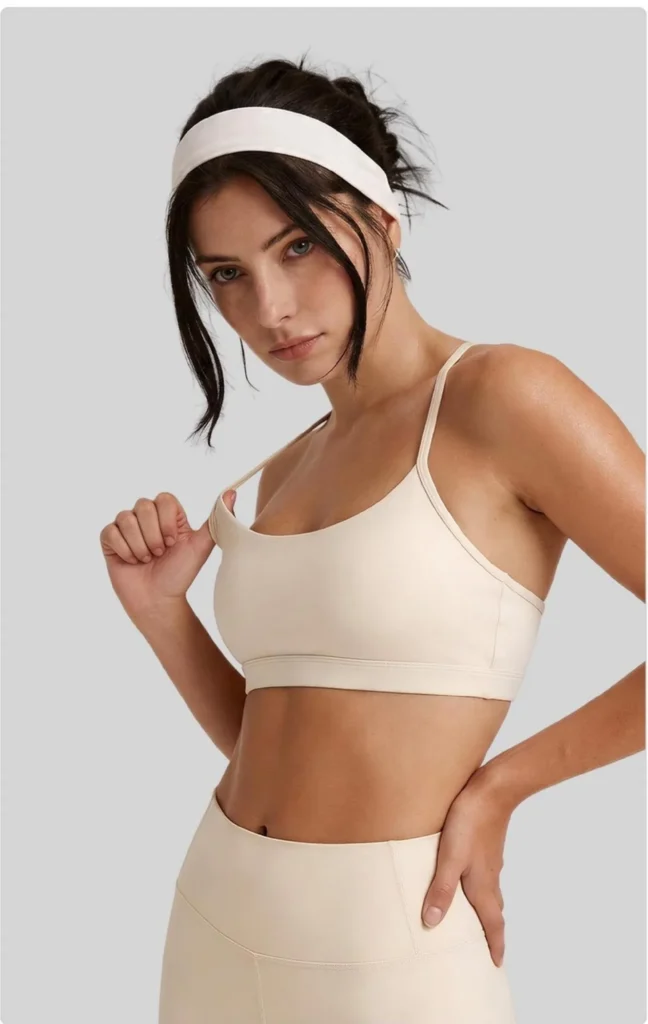
This is a cost breakdown of a 100-piece private label run, the way we quote it, with the numbers we use in real quotations. It is not a price list; fabric and decoration move the total a lot. It is the structure you need to compare suppliers fairly.
On a stocked fabric and an existing pattern, 100 pieces per style and colour is a genuine minimum — the cutting room can lay it, and the dye lot is already fixed. Three things change that number:
The largest single line, usually 35–45% of the FOB price. A butter-soft 75/25 nylon-spandex at 230 gsm costs materially more than a 78/22 polyester at 220 gsm — often 25–35% more per metre. On a legging using about 0.9 m, that difference is the whole margin on a low-price order.
Roughly 30–40%. It is driven by the number of panels, the seam type and the trims. A legging with a gusset, a double-layer waistband and a hidden pocket has more operations than a plain one, and the make-up cost reflects it even at the same fabric price.
Woven labels, care labels, size labels, hangtags, polybags, silicone logo. At low volume these are small in total but disproportionate per unit, because each artwork has a plate or set-up charge. Budget them once, correctly, rather than adding them after the first sample.
One sample is usually free or refunded against a bulk order above 500 pieces; extra rounds and courier are charged. Expect to pay courier in both directions if you are comparing several suppliers.
FOB Xiamen is where our price stops. Add air freight (fast, expensive, good for a first small run) or sea freight (cheap, 30–45 days door to door), plus duty and VAT in your market. A 100-piece order is often cheaper to fly than to sit in a container port for six weeks — check both before you decide.
100 high-waist leggings, one colour, butter-soft 75/25 at 230 gsm, custom woven label and silicone logo, existing pattern:
| Line | Share of FOB |
|---|---|
| Fabric | 35–45% |
| Cut, sew, finish | 30–40% |
| Trims and branding | 5–8% |
| QC, packing, inland freight | 4–6% |
| Our margin | 8–12% |
Ask any supplier to break their price into these lines. A quote that arrives as one number with no breakdown usually hides which line they are cutting — and that is the line that will disappoint you later.
| Stage | Duration | What you do |
|---|---|---|
| Brief and quote | 2–3 days | Send styles, quantities, market, target price |
| Fabric and trim selection | 3–5 days | Approve swatches, labels, packaging artwork |
| Sampling | 3–5 days + courier | Test fit, colour, opacity on a physical sample |
| Sample revision | 3–5 days | One round is normal; two means the brief was thin |
| Bulk production | 25–35 days | First-piece approval, in-line QC photos |
| Inspection and dispatch | 3–5 days | AQL 2.5 report, packing list, FOB or DDP |
Realistically: eight to ten weeks from brief to landing, if nothing is changed after sample approval.
A supplier who answers these with numbers is worth a sample. One who answers with adjectives is not.
Send your brief and we will come back with the five-line breakdown for your styles — fabric, make-up, trims, QC and freight — rather than a single number.

Yoga wear produced with our partners in Xiamen, China.
Wholesale, OEM and private label for brands worldwide.